It all started with the question: how much does it really cost to produce a liter of milk?

It led to a full operational transformation and the creation of an integrated management system covering finance, technology, dynamic budgeting, production, and inventory.

The farm began to specialize in the area where it has the greatest potential – milk production.

The transformation was a response to dynamic geopolitical, climatic, and demographic changes that demanded a new management model: data-driven, resilient to shocks, and ready to collaborate with investors.

The changes involved full operational and financial integration: from aligning the crop plan for profitability (considering soil potential, subsidies, and machinery), through implementing cost and production control systems, to designing an investment roadmap and securing financing in line with the farm’s realities.
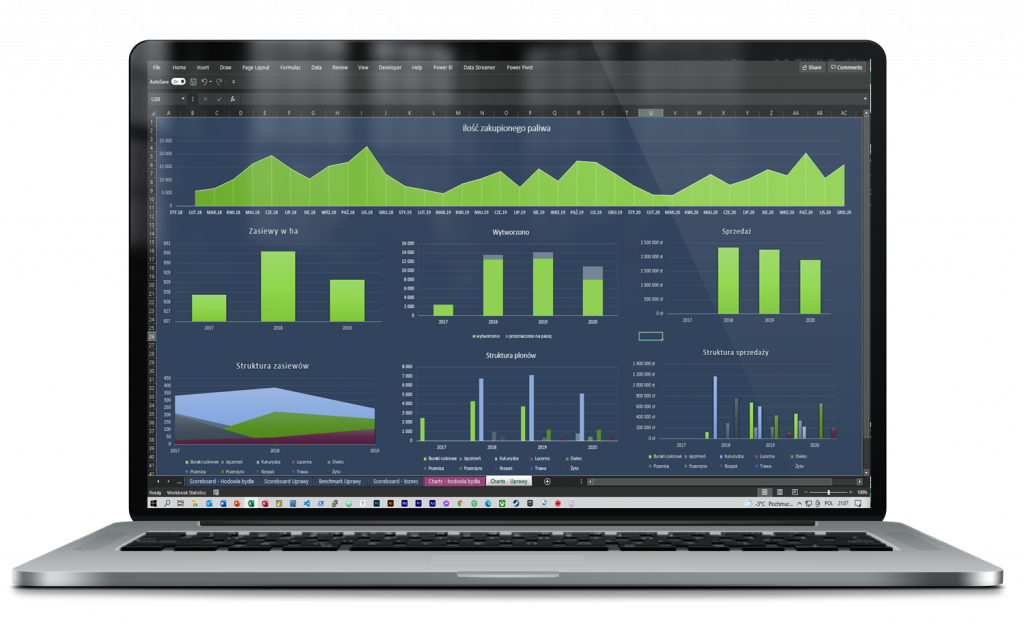
Key Challenges:


  • lack of real data on the costs of milk production and crops,
  • absence of a data-driven development strategy,
  • no tools for ongoing cost control and investment decisions,
  • inefficient invoice processing and scattered access to cost data.

The ownership team wasn’t just looking for an advisor – they needed a partner in transformation.

This is how the collaboration began with an interim CFO with fund experience, who took on the role of designer, implementer, and architect of the management system.

Stages of the Transformation:

1. Financial Analysis and Technical Cost of Production

The first step was a detailed analysis of the costs of silage, milk, and feed production. This resulted in:

  • actual unit cost calculations,
  • internal benchmarks for departments and machinery,
  • identified gaps in record-keeping and decision-making,
  • recommendations for actions with immediate positive financial impact
producent mleka dashboard 6

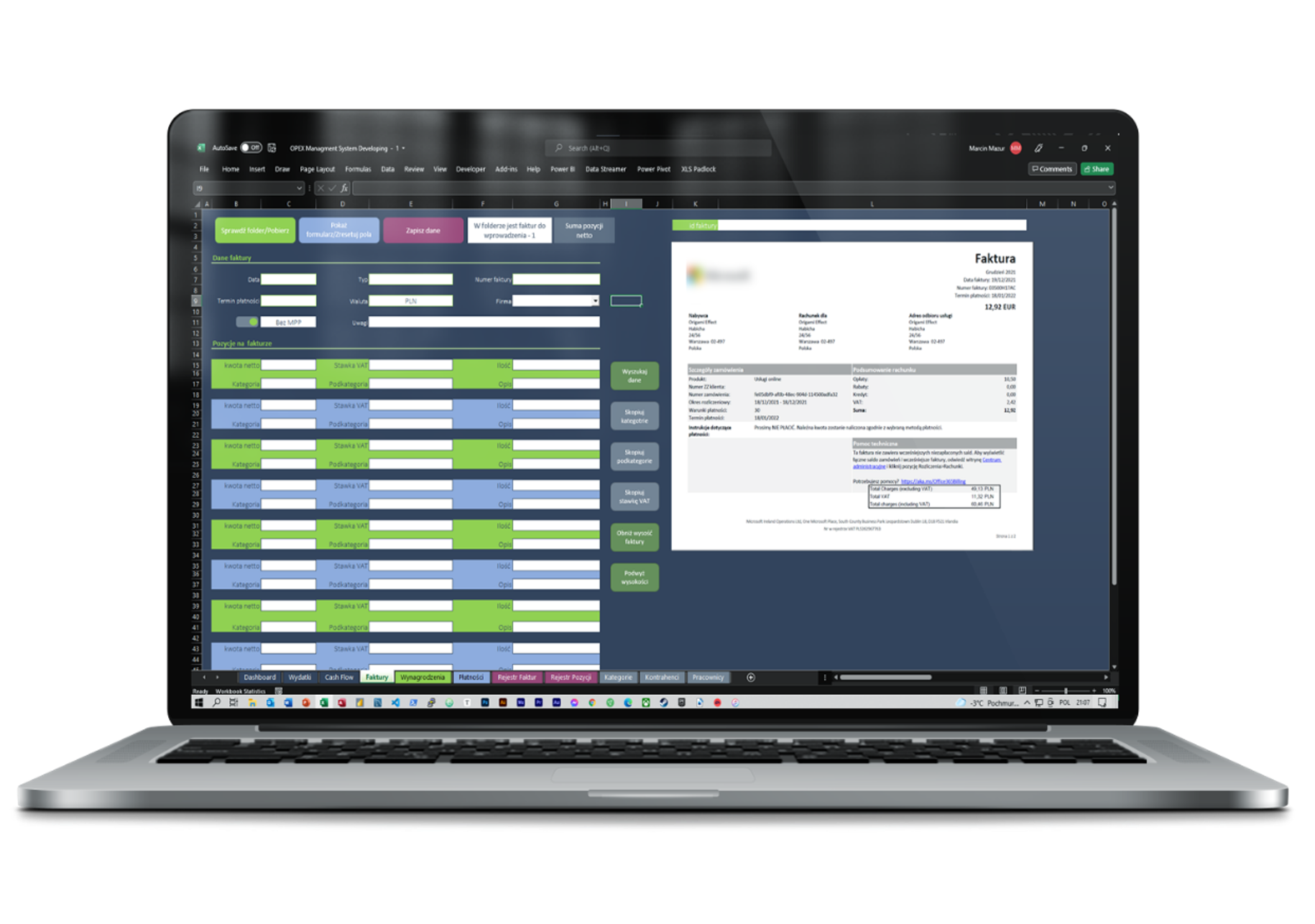
2. Building the OMS – Operational Invoice Overview

The next step was laying the foundations for management accounting, including cost tracking such as:

  • actual unit cost calculations,
  • internal benchmarks for departments and machinery,
  • identified gaps in record-keeping and decision-making.
Modul Faktura

3. Crop Planning and Work Register – SmartField and LinkField

As part of implementing management accounting and process automation, tools were built to:

  • plan agricultural tasks and fertilization,
  • report actual operator activities (including unplanned ones),
  • integrate with fuel consumption and machinery work analysis.
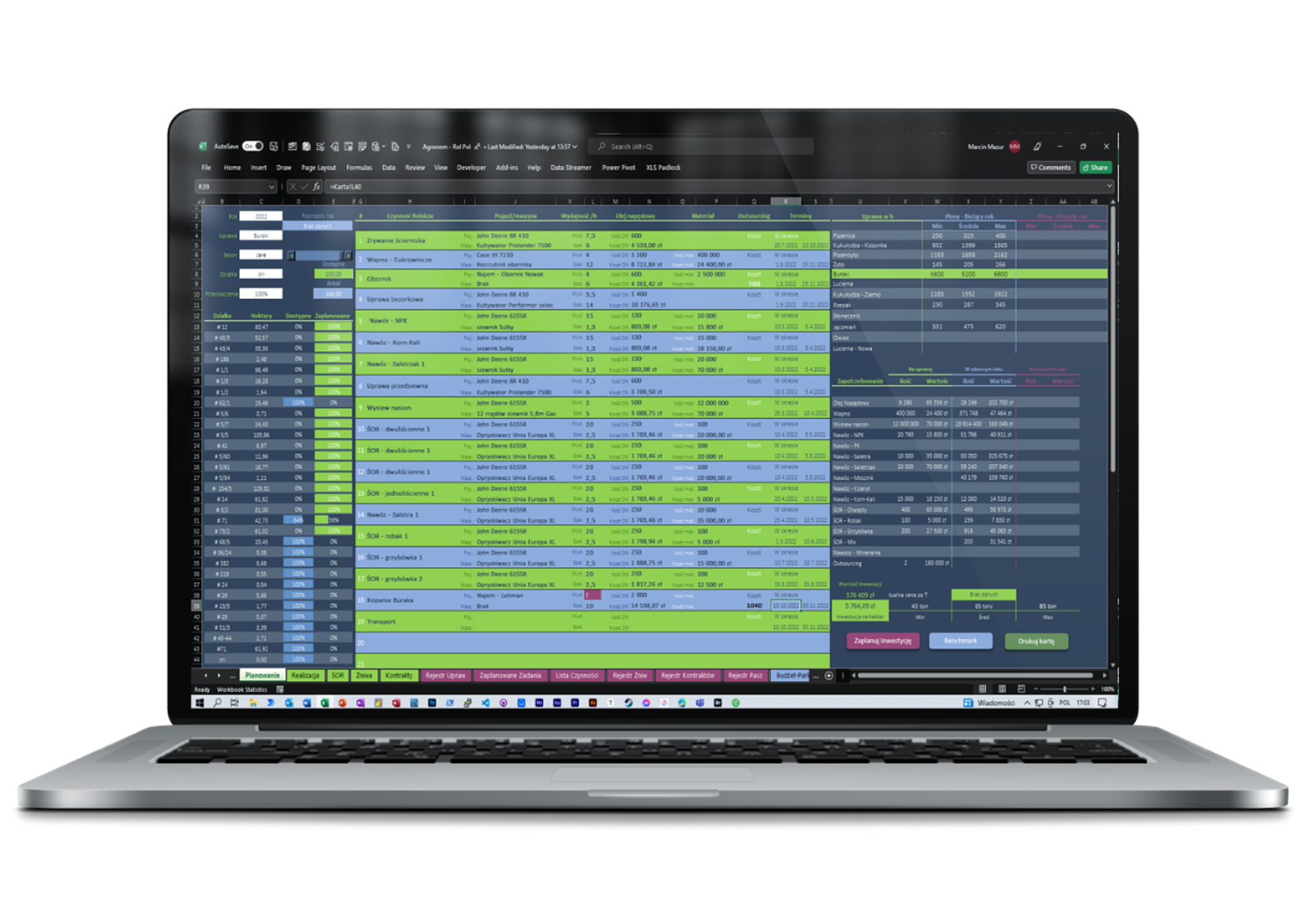
Planowanie

4. Oilhub – Automated Monitoring of Fuel, Service, and Parts

In the next phase, the Oilhub tool was implemented, closing the loop on operational machinery cost control. The system integrates data from:

  • planned fuel consumption (SmartField),
  • reported work (LinkField),
  • actual refueling (weighing systems / dispensers),
  • and invoices (OMS).
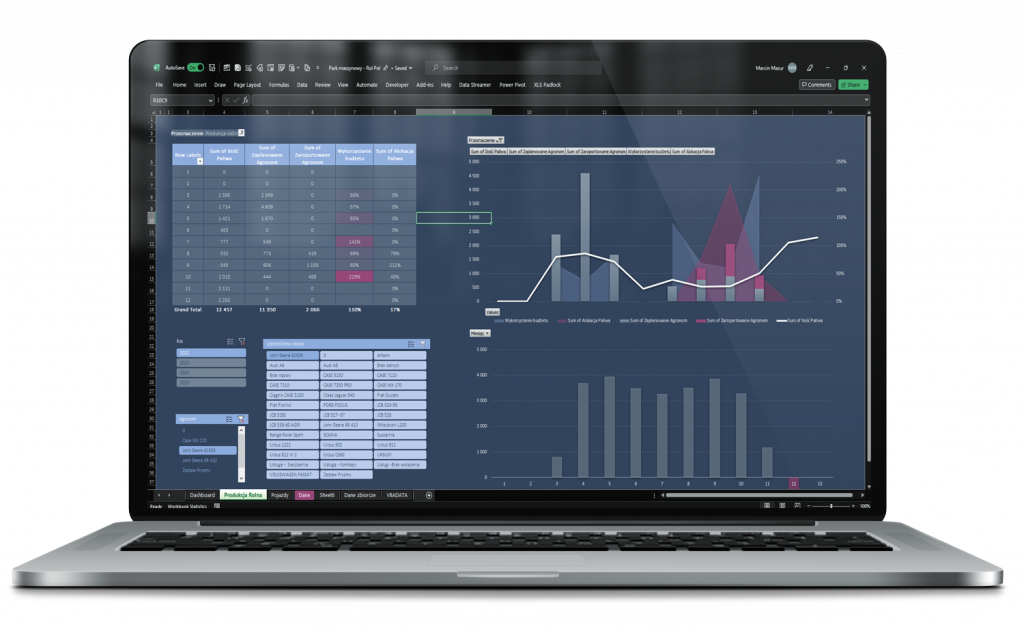
origami effect portfolio excel park maszynowy

5. MilkInsights – Milk Production and Feed Cost Analytics

To complement the animal production side, the MilkInsights tool was developed, enabling:

  • tracking milk production by technological groups and herds,

  • analyzing feed cost per liter of milk,

  • comparing results with benchmarks and nutritional standards,

  • dynamically responding to changes in feeding efficiency.

Thanks to integration with the financial model and real data (feed purchases, lactation performance), MilkInsights has become a core tool for managing milk production profitability.

6. Farm Financial Model – Budgeting, Investments, and Analyses

In response to the need for clear planning and investment analyses, the first Farm Financial Model was developed. It was designed as a universal tool for:

  • dynamic monthly budgeting,
  • cost and profitability analysis by departments, projects, and activity types (crop, livestock, energy),
  • investment planning through scenario simulations (CAPEX, leases, financing sources),
  • preparing financial documentation for loans, leases, or discussions with investors.
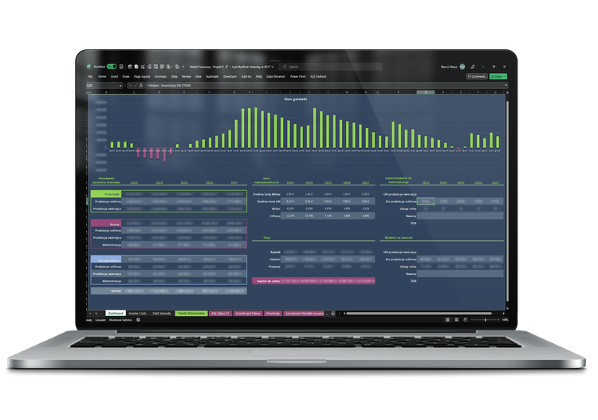
Dashboard 1

The model became the first reference point, allowing the farm to be viewed as a whole from the CFO’s perspective, rather than just that of an operations manager.

Farm Financial Model

7. FarmWise – The Financial-Operational Model as the Farm’s Control Center

In the next stage, building on experience from implementing the financial model and operational tools (OMS, Agronom, LinkField), FarmWise was created – an integrated system connecting financial data with actual farm operations.

FarmWise is more than a model. It is:

  • a farm management hub, integrating data from OMS, SmartField, LinkField, and Oilhub,
  • a tool that shows the complete cost path – from invoice, through inventory, through machinery work reports, to profitability analysis,
  • an environment where daily decisions (feed purchases, machine repairs, planning treatments) are made based on data, not intuition.
Agro Cultivations

8. Key Outcomes:

Area Before Transformation After Transformation
Financial Analysis Accounting Data Instead of looking at what has already happened, management can see what could happen. The model integrates accounting data with forecasts, budgeting, and scenario analysis.
Budget and Controlling Approximate Dynamic budgeting and real-time controlling – every złoty has its place in the plan, every change is analyzed continuously, and decisions are made based on up-to-date data and simulations.
Investment Decisions Intuitive and accounting-based Now every investment is evaluated for its impact on profitability, liabilities, total cost of ownership, and cash flow before it is executed.
Feed Cost Estimated Costs Today, the total feed cost is calculated precisely – taking into account crop, fertilization, harvesting, storage losses, and feed formulations. Moreover, FarmWise enables real-time oversight of the entire feed production – from field to feeding – showing not only the cost but also its cause and impact on financial results.
Cost of Producing a Liter of Milk Estimated Costs Today, the cost per liter of milk is calculated not only as total cost but also fully accounting for indirect costs – allowing its real impact on EBIT to be determined.
Relacja z bankiem Jednostronna rozmowa oparta na dokumentach księgowych. Merytoryczne partnerstwo oparte na danych, symulacjach, harmonogramach spłat i realnych planach rozwojowych.

9. Additionally:

Transition to the New Model – Ready for the Future

On this basis, the farm was able to move to the next stage:

  • specializing in products with greater market potential,
  • preparing land, technology, and personnel for the new business model,
  • engaging with banks and investors as an equal partner – with the advantage of a level of data detail rarely seen in this sector.

Coherent Data Architecture

Each implementation – OMS, SmartField, Oilhub, MilkInsights, FFM, FarmWise – was part of a carefully designed architecture by the Interim CFO not as separate tools, but as an integrated farm management system.

The entire system was built with a focus on:

reporting efficiency,

  • quick access to data,
  • preparing the organization for collaboration with investors and banks,
  • and independently managing the farm without the need for external controlling.

Independence and Technology that Provides Control

The entire system was built using Excel + VBA + Power Query + DAX – technologies that:

  • offer full flexibility for modifications without waiting for “implementers” or “version updates”,
  • allow local, offline operation, independent of the cloud or a third-party server,
  • are widely accessible and do not entail high subscription or licensing costs,
  • can be understood and developed internally, without creating vendor dependency.

This approach ensures that the company has control not only over the data but over the system itself.