It started with a question: how to build an online currency exchange that can survive in conditions of ultra-low margins?

It ended with a comprehensive fintech management system – from a financial model, through a BI system and invoice automation, to sales tools.

The startup began its operations in one of the most demanding segments of the financial market – online currency exchange.

The success of the project was an answer to the market challenges: ultra-low margins, high bank competition, the need to build trust from scratch, and the requirement for rapid scaling while maintaining full cost control.

The build-out covered full operational and financial integration:

  • designing the financial model supporting investment decisions,

  • implementing a BI system for managing currency transactions,

  • automating accounting processes,

  • creating data-driven sales tools.

Key Challenges:

  • There were no ready-made market solutions dedicated to online currency exchange.
  • Precise financial planning was needed in conditions of ultra-low margins.
  • There was a need to control tens of thousands of monthly currency transactions.
  • Transparent reporting was required for the potential investment fund.
  • An effective sales process based on real data needed to be built.

Stages of Building the Startup:

1. Financial Model – the Foundation for Planning and Fundraising

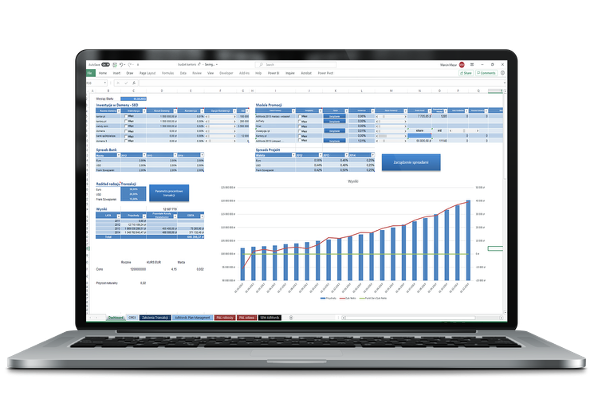
The first step was creating a financial model that enabled:

  • testing various growth and advertising campaign scenarios,
  • accurately estimating customer acquisition costs (CAC) based on Google Ads data,
  • planning capital needs (CAPEX and OPEX) broken down by development stages,
  • conducting meaningful discussions with an investment fund based on real data and projections.
Kantoris 1

The model was used not only for planning – it became an operational tool used for over 7 years, from the investment stage, through growth, to everyday financial management.

Check financial model

2. Product Design and Analytics Architecture

Before writing any code or processing the first transaction, a complete architecture for the product and analytics system was designed:

  • transactional service workflow – mapping the full user journey from registration to completed transactions,
  • homepage design optimized for conversion and analytics,
  • built-in web analytics architecture from day one – tracking sources, geolocation, and behavior analysis,
  • integration with Google Analytics and Mixpanel at the design level,
  • terms and conditions and agreements adjusted to the business model and compliance requirements,
  • system enabling identification of where users came from, their login geolocation, and full behavioral paths

This approach ensured that every business decision – from UX design to marketing and operational optimization – was based on data from the start, not guesses.

Dzięki wbudowanej od początku analityce, platforma wiedziała o każdym kliencie: źródło pozyskania, geolokalizacja logowań, pełna ścieżka behawioralna – fundament dla późniejszych optymalizacji marketingowych i operacyjnych.

3. BI System – From First Transaction to Millions per Month

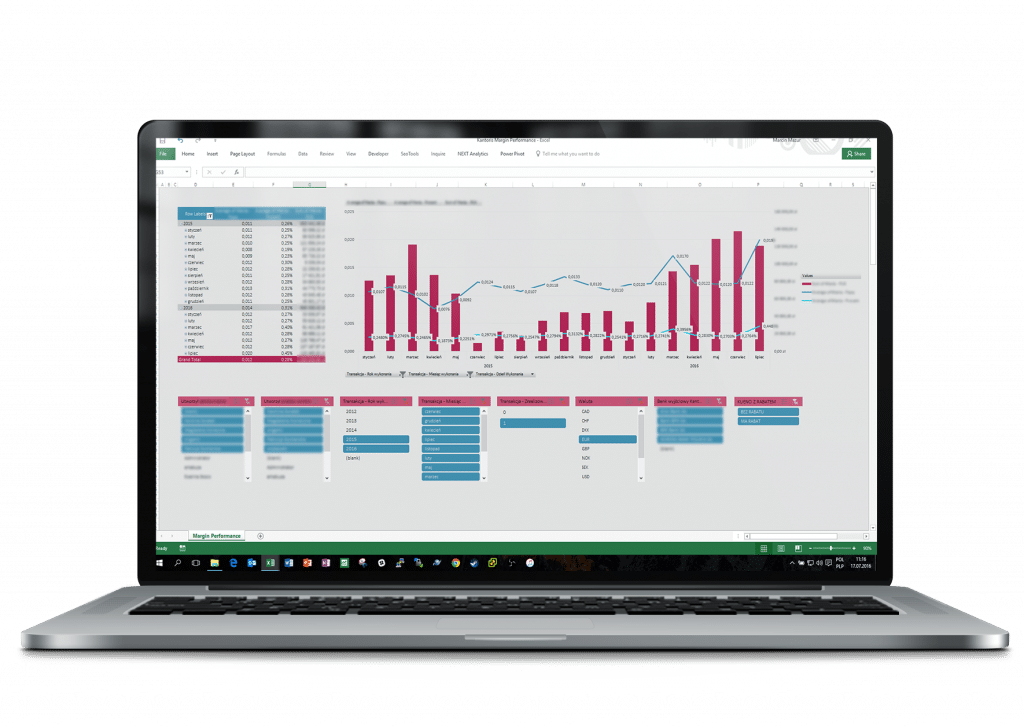
In response to the lack of analytical tools for online exchange platforms, a dedicated Business Intelligence system was built that::

  • automatically imported data from a PostgreSQL database,
  • showed transaction volumes by currency, period, and customer type,
  • supported analysis of dealer performance and sales effectiveness,
  • enabled real-time margin and profitability control,
  • supported business management from the first clients to around 15,000 transactions.
business intelligence kantoru internetowego

System działał nieprzerwanie przez wiele lat, obsługując transakcje o łącznej wartości przekraczającej miliardy złotych, zapewniając pełną zgodność danych – bez różnic nawet na poziomie grosza.

BI for the currency exchange platform

4. Invoice Register – Building Managerial Accounting

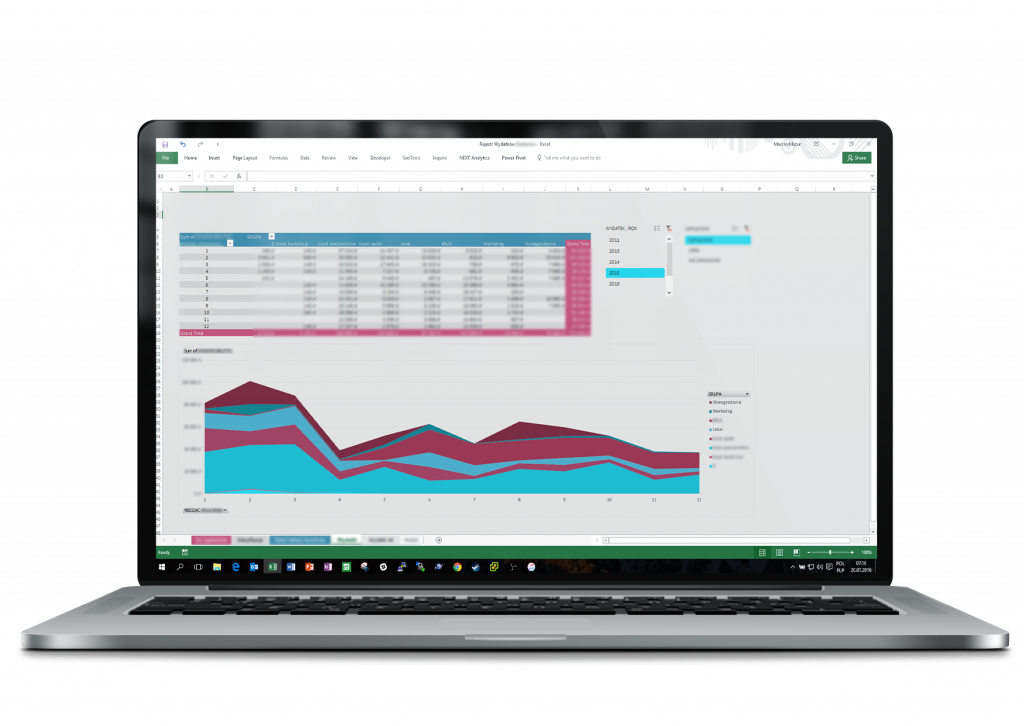
From day one, a tool was implemented to:

  • automatically import data from the accounting system,
  • segment costs by category, department, and month,
  • monitor liabilities and planned payments,
  • quickly assess cost structure yearly and monthly

This solution created a data-driven management culture from day one.

Excel podłaczony do systemu ksiegowego

The tool became a key element in building trust and increasing conversion rates in client discussions.

5. Sales Calculation Module – Gaining Sales Advantage

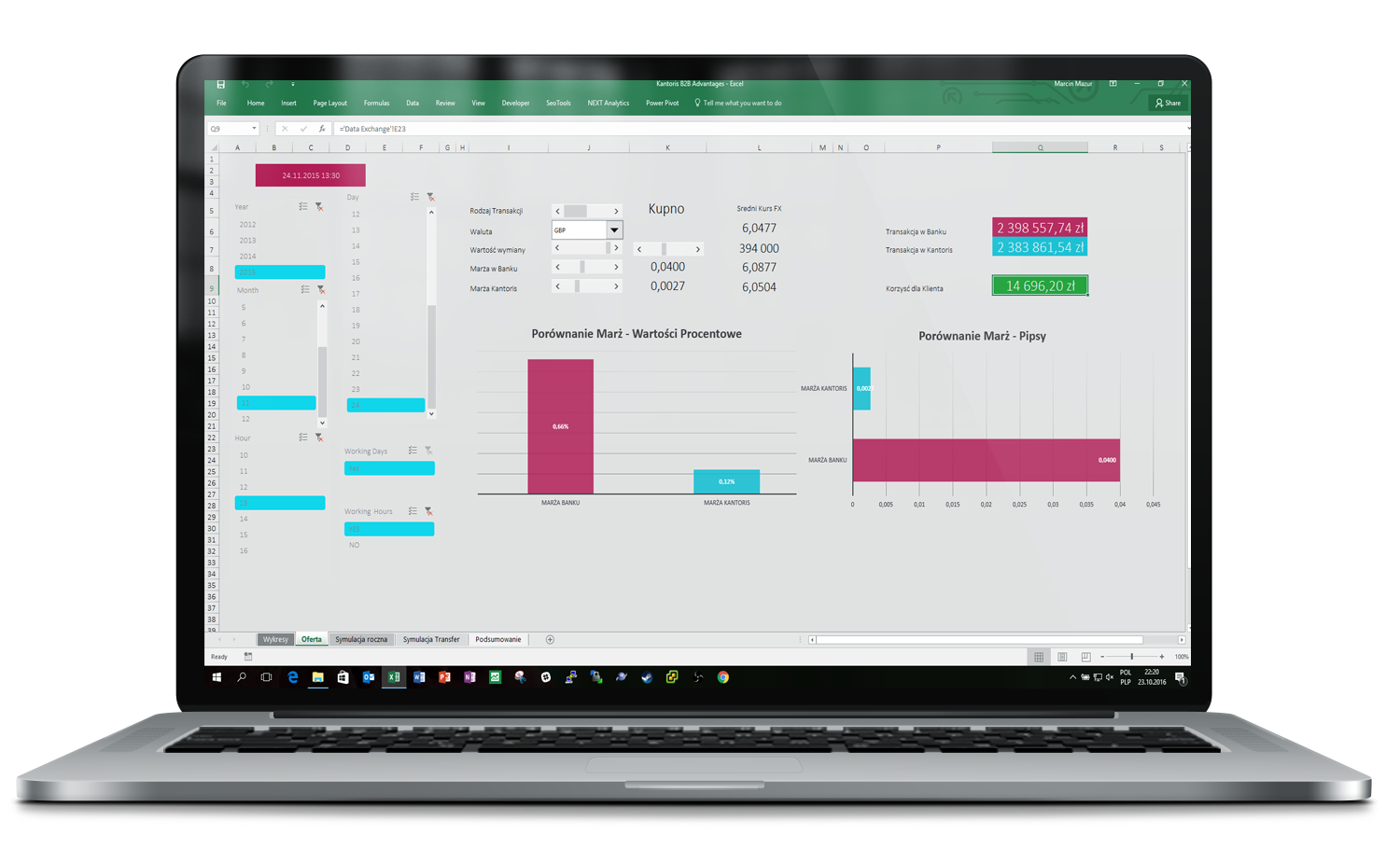
An advanced calculator was built to:

  • compare the platform’s exchange costs with bank offers,
  • use real Forex rates and bank transfer costs,
  • simulate client savings over a given period with visual projections,
  • give sales teams an edge by offering concrete numerical insights, not just claims.

This tool became a key element in building trust and increasing conversion in client discussions.

Oferta

Narzędzie stało się kluczowym elementem budowania zaufania i zwiększania konwersji w rozmowach z klientami.

Sales Support Calculation Module

5. Additional Benefits

Financial Planning No tools Dynamic financial model with scenario analysis, supporting investor acquisition and growth management
Transaction Management No dedicated solutions BI system built from scratch, handling operations from the first transactions up to 15,000
Cost Control Standard Accounting Automated real-time cost analysis with segmentation and liability monitoring
Sales Process Quote Based on Declarations Calculation tool showing specific savings based on market data
Business Outcome Over 1 billion PLN in revenue in the second year of operations with a positive net result

Additional Benefits

Comprehensive approach to building the startup enabled:

  • preparation of compelling financial documentation at the capital raising stage
  • professional execution of due diligence conducted by the investment fund
  • transparent reporting of results from the very first months of operations
  • building investor trust through control over every operational aspect

Scaling Without Chaos

The integrated system architecture enabled growth from several dozen to several thousand transactions per month while maintaining:

  • full control over margin and profitability of each transaction
  • immediate access to key business performance indicators
  • operational efficiency even during rapid volume growth
  • data consistency across all systems without manual synchronization

Competing with Banks Through Technology

The platform was able to offer better conditions than traditional financial institutions thanks to:

  • precise real-time control of operational costs
  • process automation that, in banks, requires the involvement of multiple employees
  • analytics enabling margin optimization without losing competitiveness
  • offer transparency supported by concrete data for clients

Independence from Software Vendors

Using Excel + VBA + SQL + PostgreSQL instead of off-the-shelf ERP systems provided:

  • the ability to implement immediate modifications without submitting requests to an external vendor’s IT department
  • avoidance of high licensing costs typical of enterprise solutions
  • full control over business logic and calculation algorithms
  • the capability to respond quickly to regulatory and market changes

This approach ensures that the company maintains control not only over its data, but over the system itself.