
SmartField — an app for agronomists to plan and control farm crops
Crop planning, cost control, and progress monitoring in one tool.
SmartField supports farm management: from crop planning and budgeting field operations to monitoring their execution and analyzing harvests and crop sales. It helps control production costs, resource use, and crop profitability.
Key facts
2022
Year delivered
5 areas
Data, planning, execution, harvest, and contracts
LinkField
Integration with a mobile app
The challenge
How can budget planning be combined with cost and productivity control?
Crop management requires taking many variables into account: fields, resources, field operations, costs, and yield forecasts. Without bringing this information together, it is harder to plan the season, monitor the budget, and assess the results of individual crops. SmartField organizes these areas in one tool — from planning and execution to harvest and contracts.
Without SmartField
Scattered information
Crop plans, operating costs, resource use, and harvest results have to be tracked and compiled separately.
With SmartField
One management process
Farm data supports planning, recording completed work, analyzing harvests, and monitoring contracts and results.
System architecture
Farm and market data
Information about fields, technical resources, employees, crop history, and yields is supplemented with market data, including the prices of agricultural products, fertilizers, and fuel.
Season planning
The data is used to prepare crop budgets, schedules for operations, resource requirements, and forecasts for yields and margins.
Work execution
The module records completed operations, fuel and material use, and working time. Actual results can be compared with the assumptions in the plan.
Harvest and contracts
Data on yields, their quality, storage, and transport is supplemented with information on contracts, sales, costs, and operating results.
LinkField integration
SmartField works with the LinkField mobile app. Data is synchronized in both directions between the app and the central system.
Modules and features
SMARTFIELD 1.0 — DATA
Farm and field data
Users enter the farm and field structure, including field area, location, soil types, water availability, and other characteristics relevant to planning.
Resources, crop history, and yields
The system takes into account machinery, vehicles, operators, and their availability, as well as the history of previous production cycles. This data supports productivity analysis and planning future activities.
Record of operations and resource use
SmartField collects information about agricultural operations from sowing through harvest, as well as fuel, fertilizer, pesticide, and other plant protection product use. Work progress can be recorded and tracked in real time.
Market data
The system can take into account market prices for agricultural products and raw materials such as fertilizer and fuel. This data supports cost forecasting and sales planning.
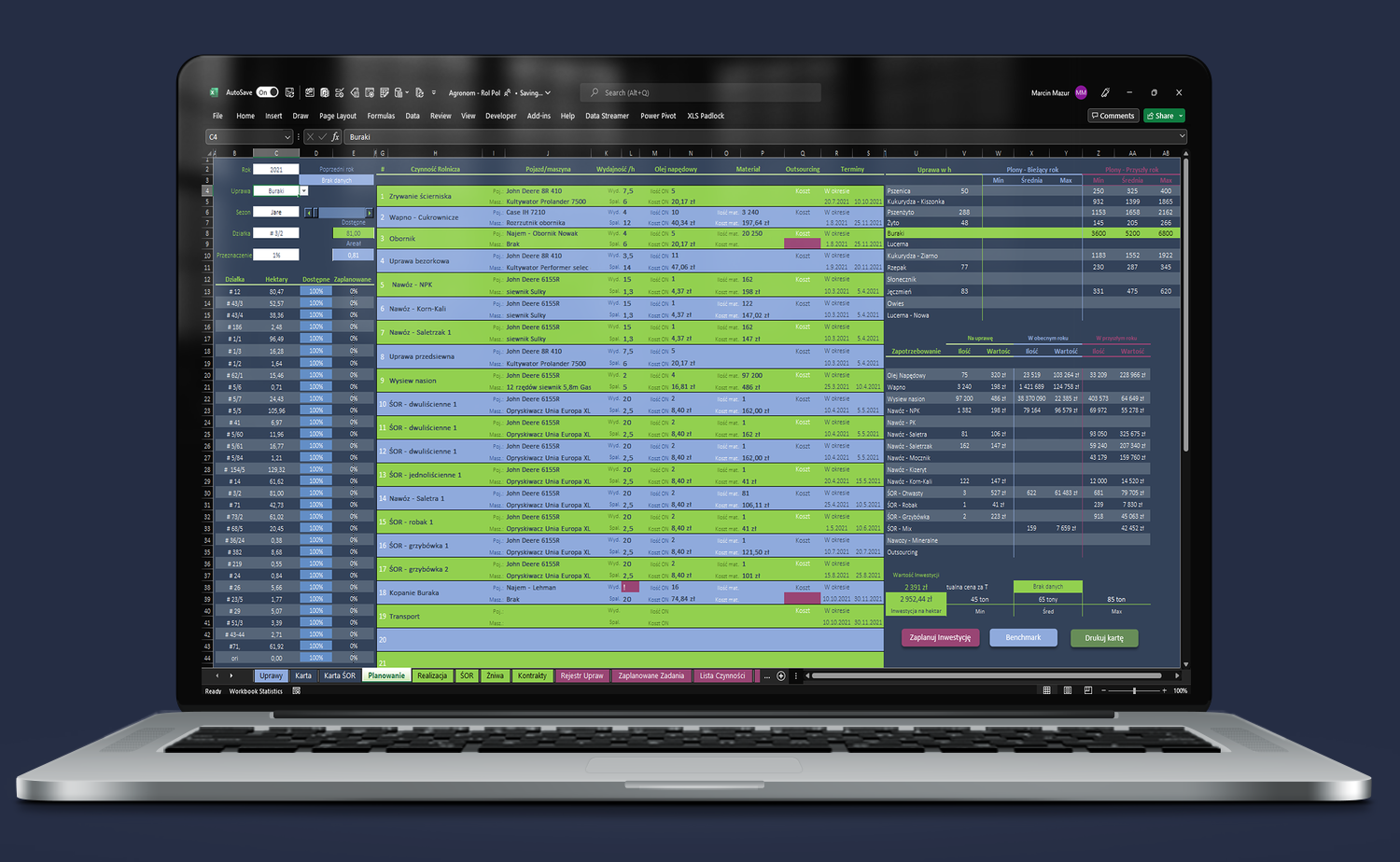
SMARTFIELD 1.0 — PLANNING
Planning tailored to the crop
The module layout and available options adapt to the selected crop. For silage corn, the system displays operations, vehicles, machinery, and resources suited to that crop.
Crop and operation budgets
Detailed budgets can be created based on planned work, materials, fuel, and outsourcing. The plan covers, among other things, stubble cultivation, fertilizing, sowing, spraying, and harvesting.
Schedule and resource requirements
For each operation, users can specify the date, vehicle, machine, productivity, fuel consumption, fuel costs, and required materials. Outsourcing can also be taken into account. For example, stubble cultivation can be scheduled from 25.07.2024 to 15.08.2024.
Yield forecasting
The module lets users monitor yield forecasts for the current and following year in minimum, average, and maximum scenarios. For silage corn, an example forecast range for the current year is 6,548 to 13,096 units.
Costs, investments, and margin
The system shows resource quantities and costs, including fuel, fertilizer, and plant protection products, for the current and following year. Based on market prices and yield forecasts, users can estimate crop margins and compare scenarios. In the example given, the margin per hectare ranges from PLN 1,272.58 with minimum yields to PLN 1,692.53 with maximum yields.
Current-season and next-year summary
A summary of financial outlays, material requirements, and resource productivity provides an overview of planned expenses for the current season and the following year.
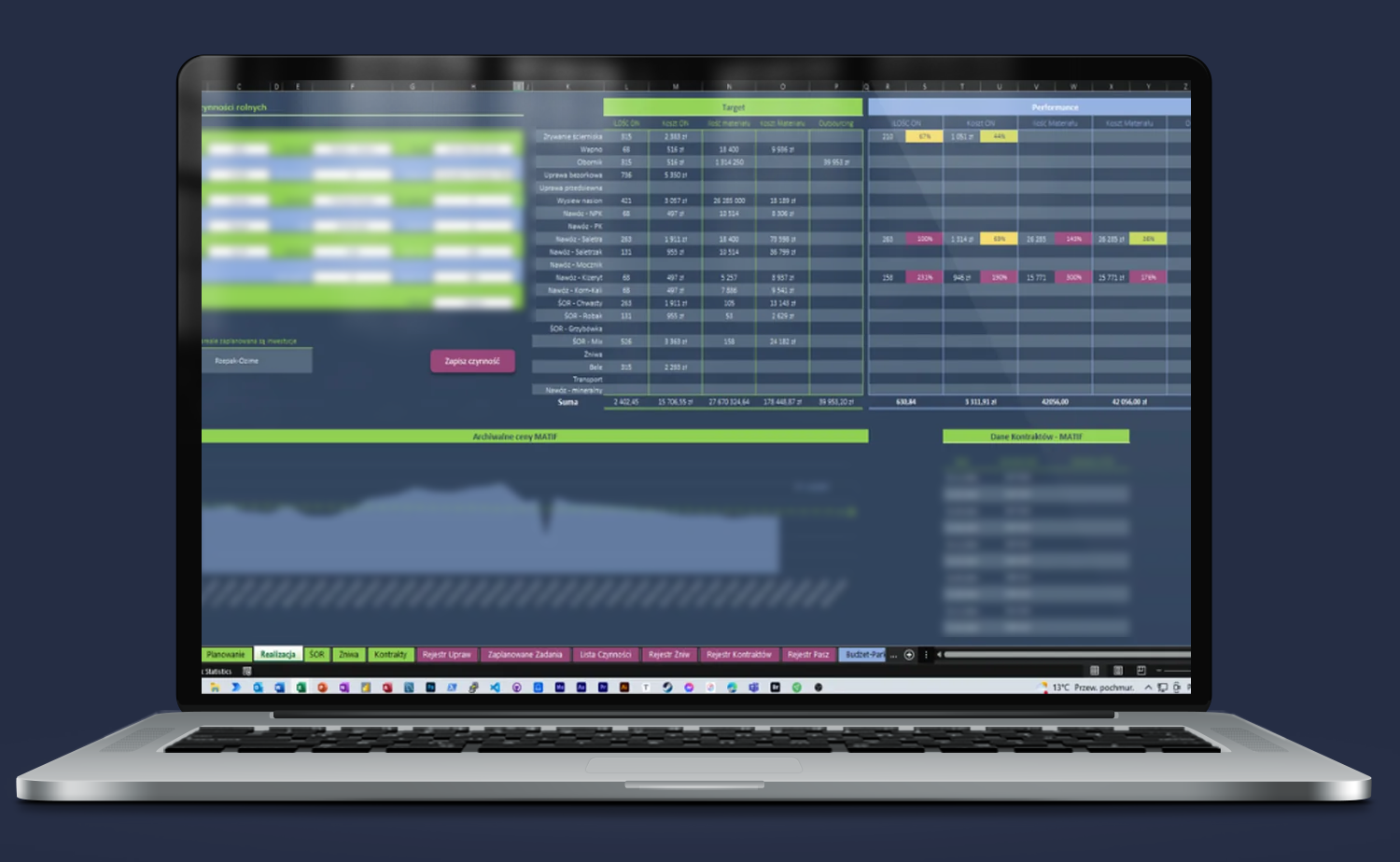
SMARTFIELD 1.0 — EXECUTION
Recording agricultural operations
Users record completed work, such as fertilizing, spraying, harvesting, or soil cultivation. An entry can include the date, field, crop, season, and purpose of the operation.
Comparing actuals with the plan
Actual results can be compared with the assumptions in the Planning module to identify variances in costs and material use.
Cost and resource control
The module allows users to analyze the costs of materials, plant protection products, and outsourcing, and compare expenses with the budget. Fuel use and the working time of machines and operators are also recorded.
Productivity analysis
Users can review the efficiency of operations, such as productivity per hour worked or per hectare, and compare actual results with planned targets.
SMARTFIELD 1.0 — HARVEST
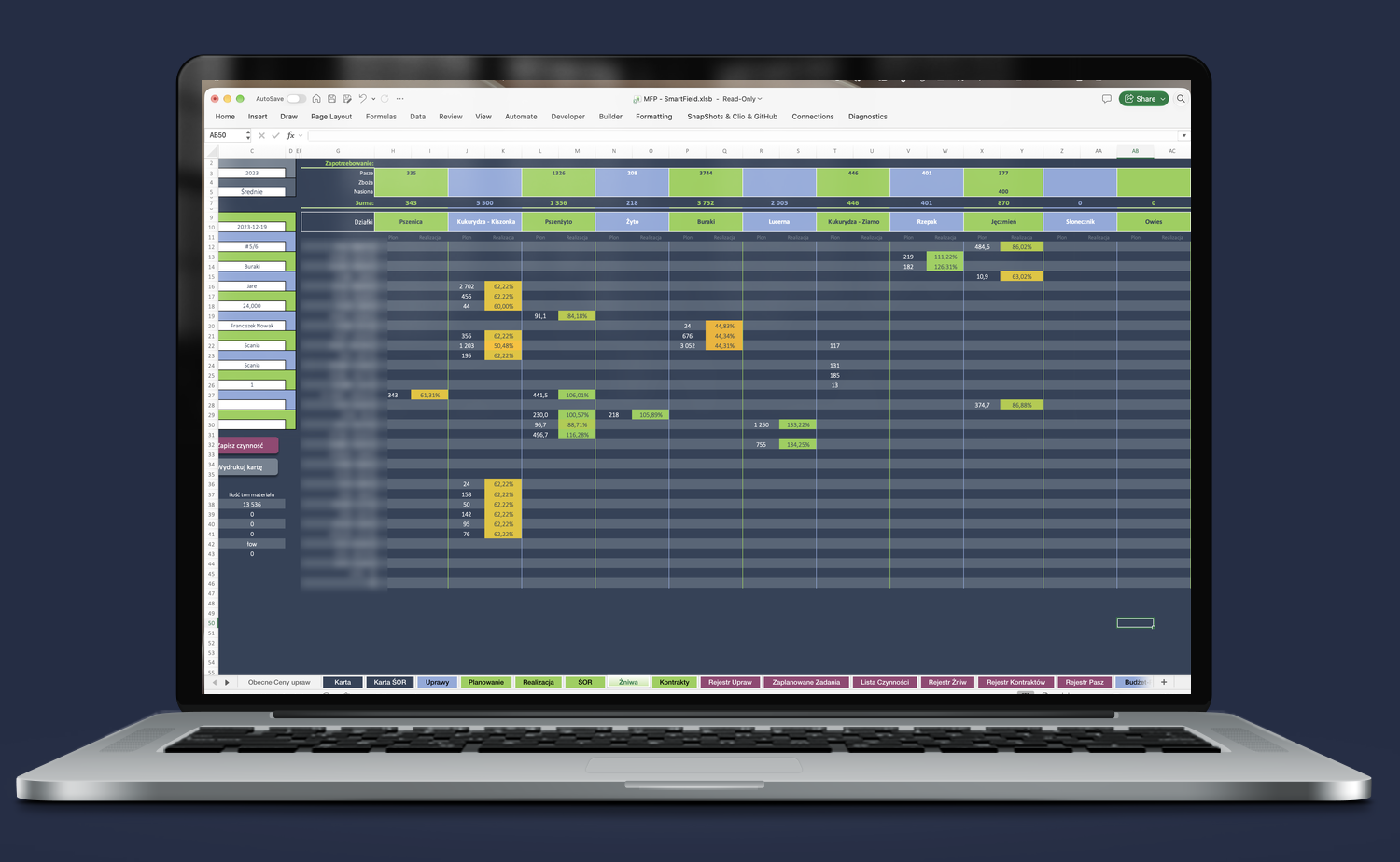
Recording and analyzing harvests
The module allows users to record harvests from individual fields and track yield volume, weight, and quality.
Scoring and crop comparison
Productivity assessments use historical data and information about crop quality. Comparing results with previous years helps analyze trends and identify areas for improvement.
Yields by field and crop
Data is monitored for each field and crop type, then aggregated to enable analysis of results across the entire farm.
Storage and transport
Users can record crop storage and organize transport to customers or the market, tracking stored and shipped yields.
Results reporting
Charts and tables present harvest results, crop quality, costs, and profitability. Reports can be exported to other formats.
SMARTFIELD 1.0 — CONTRACTS
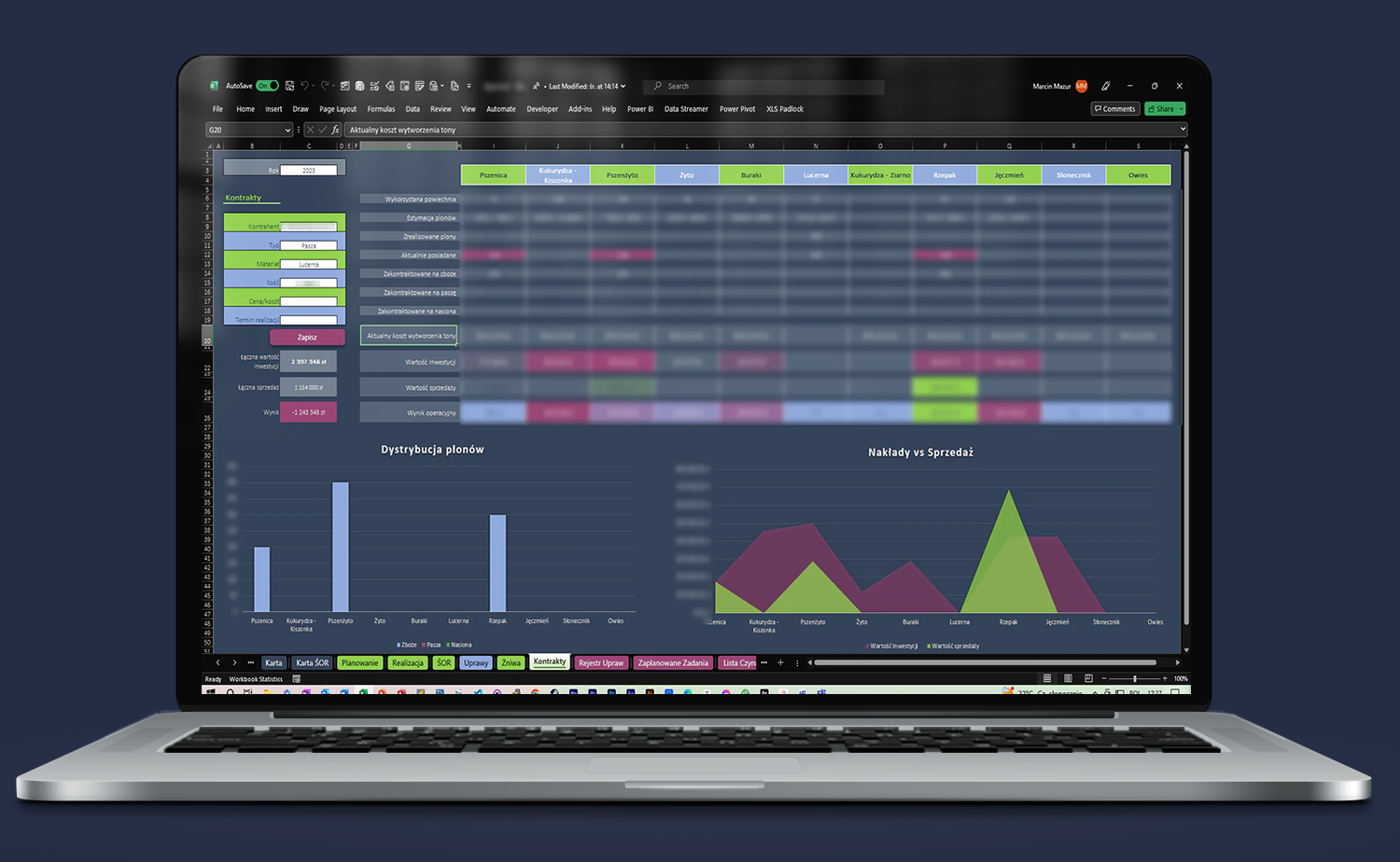
Managing commercial contracts
Contracts can include details of the counterparty, material type and quantity, price or cost, and delivery date. A contract can be linked to a specific crop.
Investments and sales
The module tracks investment costs and sales value for a crop, field, and the entire farm. It supports analysis of outlays and revenue from contracted yields.
Operating result and production cost
The system calculates profit or loss for each crop based on investment costs and sales revenue. It also calculates the cost of producing one tonne for different crop types.
Reports and visualizations
Reports cover investment value, sales, operating results, and differences between plan and actuals. Visualizations show how yields are distributed among categories such as grain, feed, and seeds, and compare investment outlays with sales. Data can be exported or analyzed in the system.
SmartField — INTEGRATIONS
Synchronization with LinkField
SmartField works with the LinkField mobile app. Changes and updates made in the app are reflected in SmartField, and data is also synchronized in the opposite direction.
Implementation outcomes
Crop and budget planning
The ability to prepare work schedules, budgets, and resource requirements for selected crops.
Cost and execution control
A comparison of planned and actual costs, material and fuel use, and working time.
Harvest and yield analysis
Data on yield volume and quality can be analyzed by field and crop, and compared with historical results.
Visibility into sales and profitability
Information on contracts, investments, sales, and costs supports analysis of operating results and the cost of producing a tonne.