

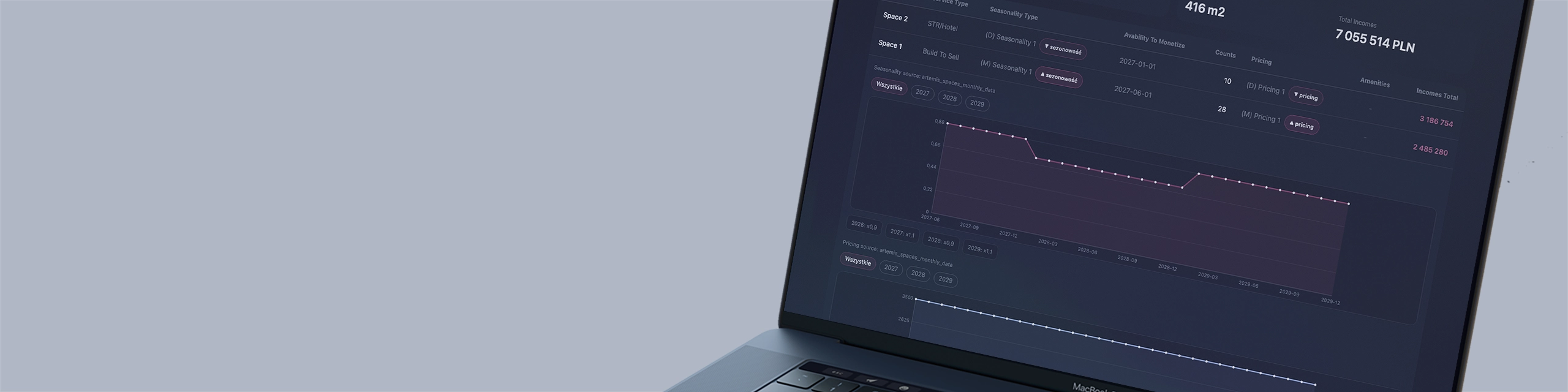
You have data.
You don’t have answers.
Why do companies with data still make decisions in the dark?
Because the data is scattered, inconsistent, and reaches decision-makers too late.
Origami Effect organizes the logic of the business and turns data into a single source of truth that actually drives decisions.
The problem is not a lack of data. The problem is a lack of decision architecture.
In most organizations, nobody owns end-to-end how data becomes action. That is why reports are manual, KPIs are inconsistent, and decisions rely on intuition. Origami Effect designs and implements systems where numbers work for management every day, not once a month.
Where Origami Effect focuses:
- Operational outcomes: Origami Effect delivers working solutions, not presentations and recommendations that never get implemented.
- A single source of truth: Origami Effect connects ERP, Excel, and operational data into one coherent management model.
- Decision-first architecture: Origami Effect designs the exact logic that shortens response time and increases profitability.
How Origami Effect works
Transformation models designed around value.
Interim Management
Origami Effect takes ownership of financial and operational results. The focus is business impact, not slides.
Transformation projects
Origami Effect audits bottlenecks, designs the architecture, and implements reporting and process automation from the ground up.
AI Advisory
Origami Effect supports system and team development so the organization can keep its edge in a data-driven model.
Why this approach works
Investment background
Origami Effect designs solutions for real business value: IRR, risk, and cash-flow efficiency.
Architecture over ready-made software
Origami Effect does not deploy a one-size-fits-all tool. It builds the model that matches the physics of your business.
Technology that works
We connect analytics and technology (Python, SQL, ML, VBA) into a scalable decision engine.
Ownership of results
In the Interim Management model, Origami Effect takes responsibility for implementation and measurable operational outcomes.
Transitioning to a data-driven enterprise
From reactive reporting to predictive intelligence.
Origami Effect changes how an organization functions. By replacing manual workflows with engineered automation and predictive modeling, the business evolves into a lean, data-backed machine. The goal is to deliver the right insight to the right person at the right time — supporting decisions, not complicating them.
What the management team gets
The management team gets the right information at the right moment, while the organization shortens response time and reduces the cost of bad decisions.
Where the process begins depends entirely on where you are
Every company has data.
The question is not whether you collect it, but whether it works for you.
Whether the decisions you make today are based on what the system computed, or on what someone had time to prepare.
Origami Effect designs the systems that change that answer.
The entry point depends on the structure of your company — not on what is convenient.
Your ERP stores years of transaction history — but it was built for bookkeeping, not analysis.
Purchasing decisions, demand forecasting, customer segmentation, promo evaluation — all of that happens outside it, manually, in spreadsheets.
You do not have ERP — your data lives in Excels, invoices, operational apps, and people’s heads.
It is reliable. But it does not talk to itself.
The report is created when someone finds the time — not when something happens.
You manage real estate investments
Liquidity, financing structures, and multi-scenario commercialization paths. Decisions about redevelopment, leasing, or portfolio valuation require financial simulations that respond to market shifts in real time — not static reports.
You run an agricultural business
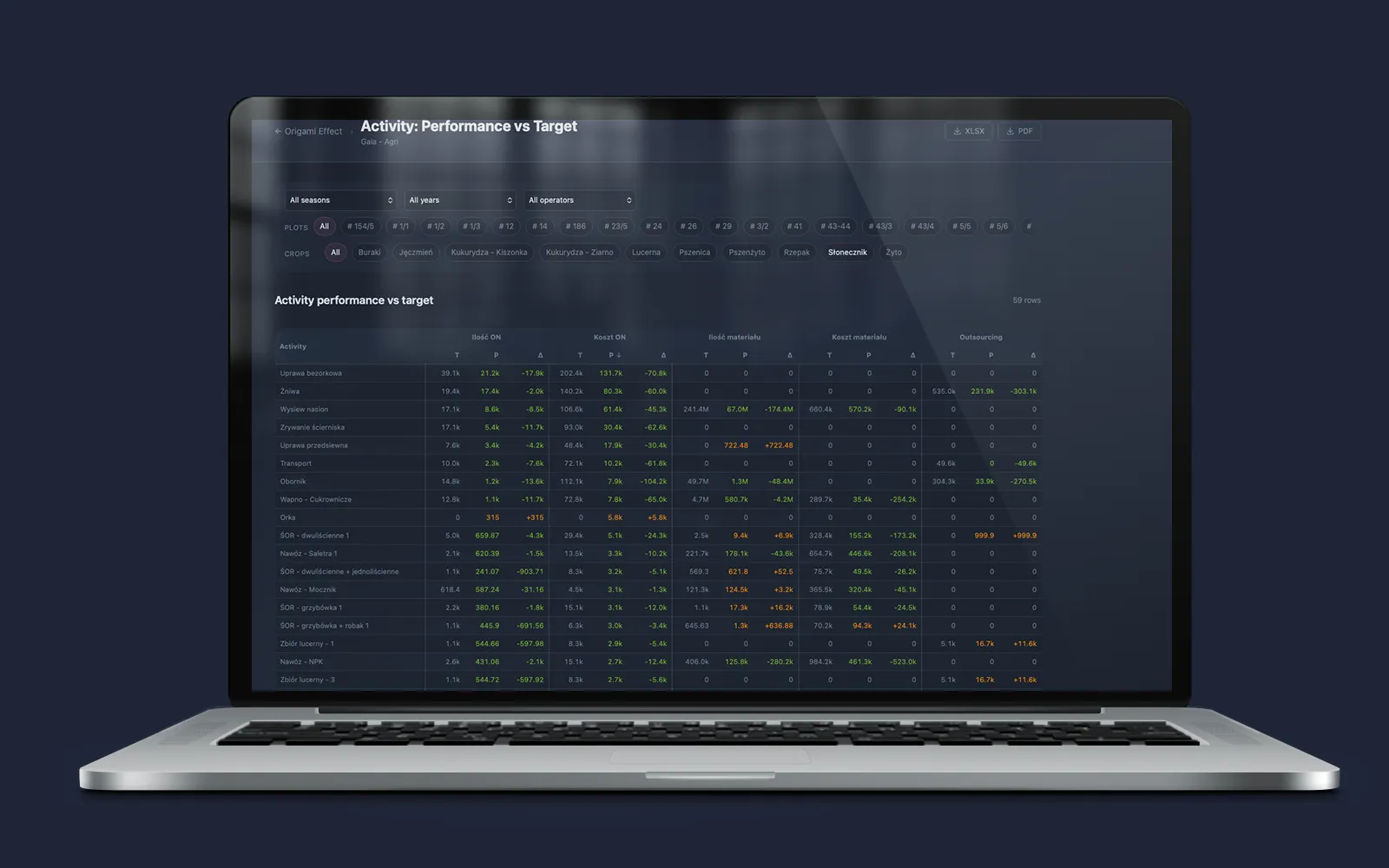
Feed, dairy, agronomic, and cost data live with different people — the finance lead, the zootechnician, the agronomist, and the accountant. They never meet in one place.
A report is assembled only when someone finds the time.
Is your business already data-driven?
If scattered data and manual workarounds are slowing organizational growth, it is time for a change. Origami Effect analyzes where business logic breaks down and engineers a simple, profitable path forward.
FAQ
How long does a typical transformation project take?
It depends on process complexity. Transformation projects, such as automating reporting workflows or controlling modules, usually take between 4 and 10 weeks. In the Interim Management model, where Origami Effect takes full operational responsibility, engagements typically run from 3 to 6 months to ensure implementation and stabilization.
Do I need to replace my existing ERP system?
In most cases, no. The problem is rarely the ERP itself, but how it is used. Origami Effect builds a data architecture that extracts information from existing systems and unifies it in one analytical model. The goal is a high-performance decision engine without the cost and risk of a full ERP migration.
How does Interim Management differ from standard consulting?
The difference is fundamental: a consultant delivers slides with recommendations, while Origami Effect delivers a working solution. As an Interim Manager, Origami Effect operates inside the organization, takes full responsibility for the operational result, and ensures the data architecture works in real business conditions.
How do I know if my data is ready for predictive modeling?
Every company has data that can be organized and used predictively — the key is integration quality and model logic. Origami Effect starts with an audit of sources and processes, then designs a solution matched to the organization’s maturity.
What happens after the collaboration ends — will I be left with a system no one understands?
No. The systems are built to be readable and maintainable by the client’s team. As part of delivery, we provide documentation, system logic, and a development plan so the organization keeps full ownership after the project ends.