
Data Warehouse · Analytics
Data warehouse & analytics system.
A single source of truth built by an Interim Manager.
Your company has data in ERP, CRM, spreadsheets, and documents.
Simply bringing it all together in one place isn’t enough to manage margins better, plan purchases, or control cash flow.
Measurable results
100%
accountability for data and implementation
3-6
months of a typical interim engagement
1
source of truth instead of scattered spreadsheets

More than organized data. A system that helps achieve business goals.
Your company has data in ERP, CRM, spreadsheets, and documents. Simply bringing it all together in one place isn’t enough to manage margins better, plan purchases, or control cash flow.
I design and implement data warehouses and analytics systems — from collecting information and processing it according to business rules to reports, recommendations, and automation. I make sure the right data is processed appropriately and reaches decision-makers when they need it.
As an Interim Manager, I combine a management, financial, and technology perspective. I don’t start by choosing a tool, but by asking: what decision or action should this system support?
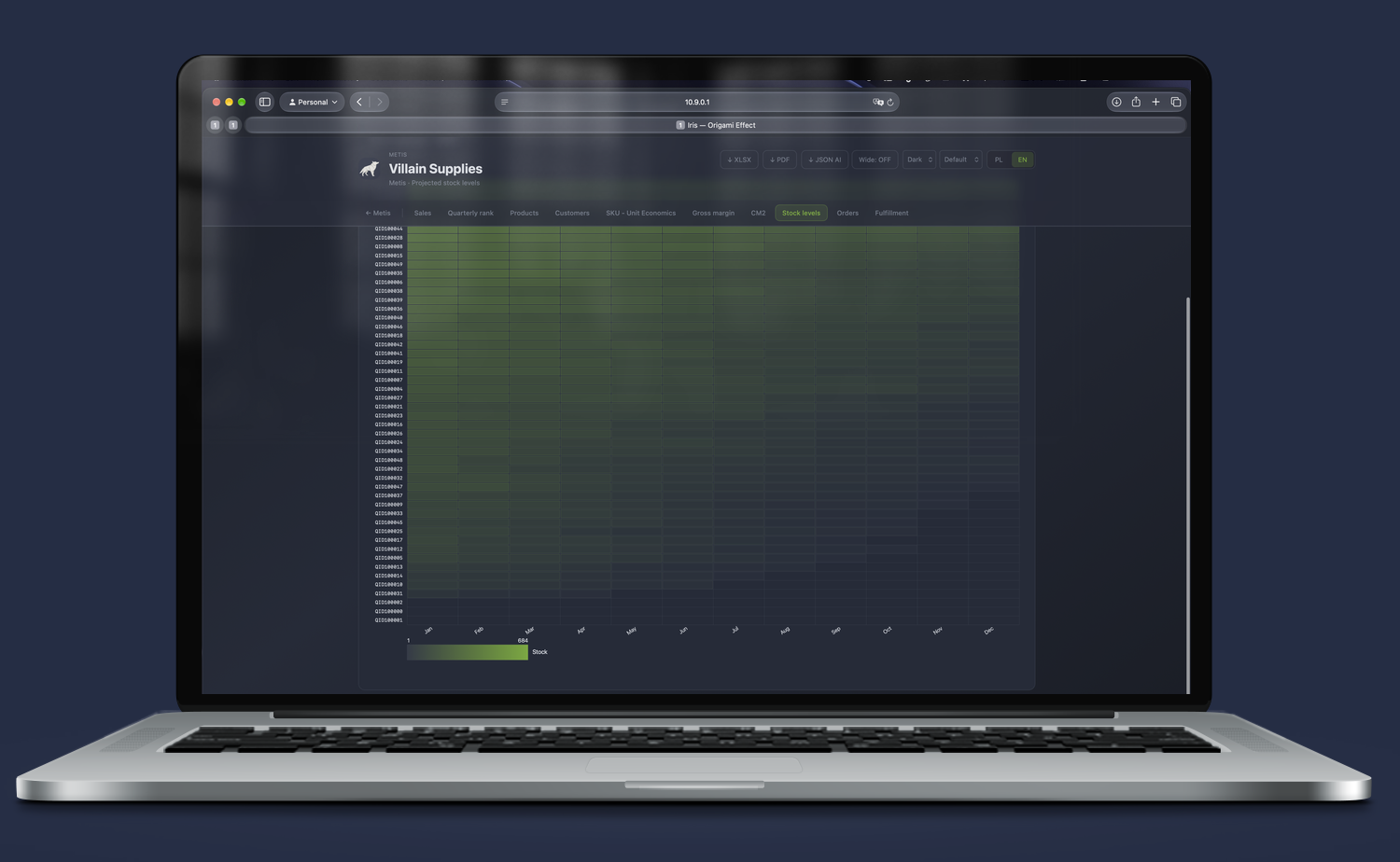
A data warehouse is the foundation. It doesn’t replace the entire analytics system.
A data warehouse stores organized information and its history. But on its own, it won’t determine how your company should calculate margins, when to warn of a risk of running out of stock, or what to give a sales representative so they can prepare an offer.
That’s why I don’t stop at connecting databases and launching a dashboard. I also design the business logic: KPI definitions, calculation rules, classifications, thresholds, and how to use the results. This is what makes the data answer specific questions, rather than creating another set of numbers.
A single source of truth means more than one database
Consistency requires not only a shared place to store information, but also agreement on what that information means. Two departments can use the same database and still calculate profitability differently.
I establish which sources feed a given KPI, which costs it includes, which period it covers, and how its result can be verified. This allows management, finance, and operations to work from the same rules.
Margin and profitability
I combine sales data with costs, discounts, and financing to analyze results according to the agreed margin definition. The goal is not only to show a variance, but also to make it possible to see where it came from.
Inventory and purchasing
I bring together sales history, inventory levels, and orders. Depending on your needs, I can supplement the analysis with product classifications, demand forecasts, and alerts to support purchasing decisions.
Finance and controlling
I organize financial and operational data for management reporting, cost analysis, and monitoring plan performance. I align the rules for assigning data to periods, categories, and areas of responsibility.
Sales and operational activities
I connect analysis to the next step in a process: recommending products, preparing an offer, document, or notification. The result doesn’t have to end with a chart or require manual re-entry.
From data sources to decisions and action
A typical flow includes: sources → data collection and preparation → shared model and history → business rules → analysis → action. I select the components your company needs instead of implementing every technology just in case.
Collecting the right data
I identify what information is needed to achieve the goal and where it is located. I integrate data from systems, APIs, spreadsheets, and documents. If key information is stored in files, I also account for reading it and converting it into a usable format.
Repeatable processing and quality control
I build data flows that collect, clean, and combine information. I include checks for completeness, duplicates, and data consistency. I tailor update frequency to the decisions being made — not every analysis needs to happen in real time.
A shared model and history
I design a structure that makes it possible to join information using the right identifiers, such as customer, product, contract, or VIN. When comparisons over time are needed, I ensure the relevant history is retained instead of relying solely on the current state of the source system.
Rules, KPIs, and interpretation
I translate business knowledge into calculation and analysis rules. I define what a result means, when it requires attention, and which comparisons make sense. I add forecasts or recommendations where they address a specific need.
Information ready to use
I provide results in a format suited to the recipient: a dashboard, report, alert, or document. When the process requires it, I integrate them into the next action, with agreed control and approval rules.
How do I implement a data warehouse and analytics system?
1. I define goals and acceptance criteria
I determine which decisions the system should support, who will use it, and how we’ll know it’s doing its job. This could mean reducing the time needed to prepare a report, creating a consistent margin analysis, or detecting the risk of stock shortages earlier.
2. I review data sources and make use of existing resources
I assess data availability, quality, and history. I determine whether a new data warehouse is needed, whether to expand the existing environment, or whether an analytics layer over the available databases will suffice. I don’t rebuild what already works well.
3. I design the model and rules together with the business
I align KPI definitions, rules for combining sources, processing rules, and exception handling. I verify them with the people responsible for finance, sales, and operations.
4. I implement and verify results using production data
I launch data flows, analytics, and agreed automation. I compare the results with source documents and users’ knowledge. I check not only that calculations are correct, but also that the solution is useful in day-to-day work.
5. I stabilize the system and transfer knowledge
I prepare documentation, describe the rules, and train the team. I establish responsibility for maintenance and further development. The goal is a solution the company can use after the engagement ends.
Interim Manager: combining business accountability with implementation
At Origami Effect, building an analytics system isn’t a technology project detached from the business. An Interim Manager brings management goals, user needs, and work on the solution together in one process.
Within the agreed scope, I’m responsible for moving from diagnosis to a working system: organizing requirements, setting priorities, implementing the solution, and verifying that it’s being used.
The goal isn’t to deliver more reports. It’s to enable the company to make the decisions it needs based on reliable data — without having to prepare information manually each time.
What does this look like in practice?
Car importer: from documents to performance analysis
In the Orbis project, data from ERP, sales files, financing reports, and documents first had to be read, organized, and linked by VIN. Only then did the shared model make it possible to analyze sales, margins, discounts, inventory, and financing together.
The data warehouse alone wouldn’t have been enough: document processing and business rules were also needed. The same data model can support further activities, such as preparing leasing applications or document corrections.
B2B distribution: from forecast to offer
In the solution described in the Peitho project, historical analysis and product recommendations were connected to a sales tool. Users could move from selecting products to setting terms and preparing an offer without manually re-entering data.
The value came not only from the forecast, but from connecting analysis to a specific sales activity.
Data orchestration: from report to automated action
A report requires the recipient to open it and find the information they need. That isn’t always enough. If a result matters only when a particular date, threshold, or exception occurs, the system can send the information to the right person and flag situations that require a response.
This is the difference between a pull model, in which the recipient searches for information, and a push model, in which the system delivers it when needed.
FAQ
Do we need to build a new data warehouse?
Not always. If existing sources provide sufficient data quality, history, and availability, it may be enough to add an analytics model, business rules, or reporting. I determine the scope after reviewing your needs and current environment.
How do you tailor data processing to business goals?
I start with the decision the system should support. Then I determine the required sources, level of detail, calculation rules, update frequency, and output format. For example, profitability analysis requires agreement on costs and discounts, while inventory planning requires suitable sales history and information about availability and orders.
Can the system use invoices, documents, and spreadsheets?
Yes. The scope of integration depends on the availability and format of the sources. Data recorded in documents must be read, standardized, and checked before it can be combined with the rest of the model. Simply importing files doesn’t ensure a valid analysis.
Does the data need to be updated in real time?
No. We tailor the update schedule to the process, source capabilities, and solution cost. Some decisions require fast data flows, while daily or periodic updates are enough for others. It’s important that users know what point in time the information presented refers to.
Do we need artificial intelligence?
It isn’t a prerequisite for creating a useful system. Reliable data and clear business rules come first. AI or predictive analytics is worth adding when it helps solve a specific task and the quality of its results can be verified.
What stays with the company after the engagement ends?
Within the agreed scope, I hand over the implemented solution under a license, documentation of data flows and business rules, and the knowledge needed to use the system. I also establish arrangements for its maintenance and further development.
Let’s start with a decision your data doesn’t support today
Is it difficult to determine your actual margin? Is the report ready too late? Or is the analysis complete, but its results have to be entered manually into another tool?
Describe the problem and the sources your company uses. We’ll determine what’s missing: organized data, shared rules, analytics, or connecting results to action. Based on that, we’ll propose a scope of work — without assuming in advance that you need a new data warehouse.