


What made Ingestia stand out?
A dedicated analytical system designed for automatic monitoring of sales and interest in listings on the platform. Ingestia collected data non-stop, analyzing millions of active auctions, tracking both sales and user interest levels (number of listing views).
Key Features:
- Continuous collection of data from online auctions.
- Tracking of listing views during the auction duration.
- Automatic monitoring of auction status changes (sale, end).
- Analysis across all categories, with priority on selected segments.
- Dynamic auction queue – optimized data fetching.
- Thematic data segmentation for better performance.
Main Project Challenges
- Lack of an official API for the classifieds portal in 2012.
- Processing millions of active listings under limited memory conditions.
- Ensuring continuous data collection despite changes in the Allegro website structure.
- Excel performance optimization for very large datasets.
HOW INGESTIA WAS USED IN PRACTICE
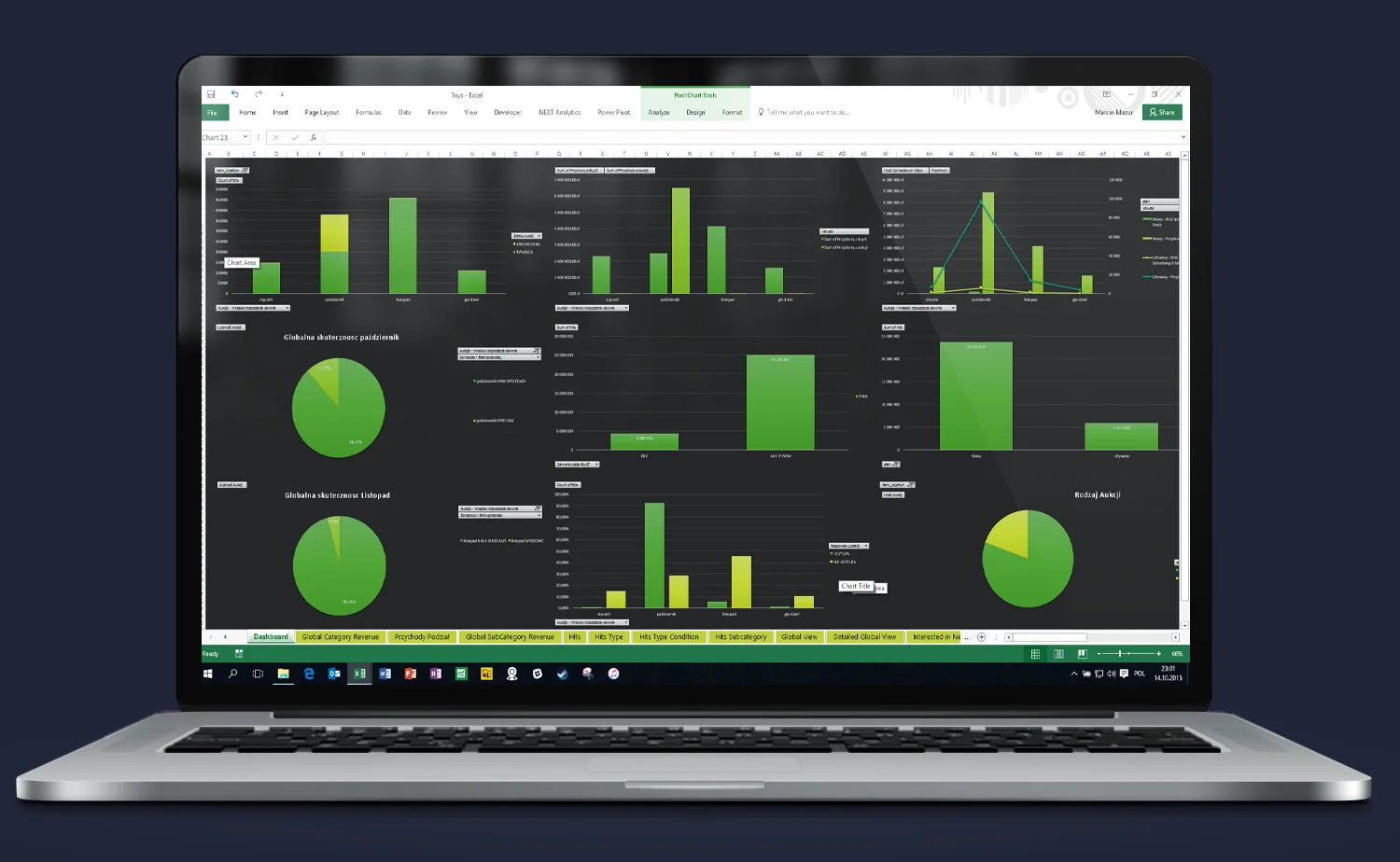
- Competitor monitoring and real-time price analysis.
- Identifying best-selling products in individual segments.
- Analysis of new listing popularity and sales velocity.
- Investment and pricing decisions based on hard market data.
- Support for planning sales and marketing campaigns.
- Non-stop data collection without API access.
- Tracking not only sales but also interest in auctions (listing views).
- Dynamic auction queue – optimization at the scale of millions of active records.
- Scalable approach: division into thematic segments and dedicated dashboards.
- Practical approach: the system was built for everyday commercial decision-making.
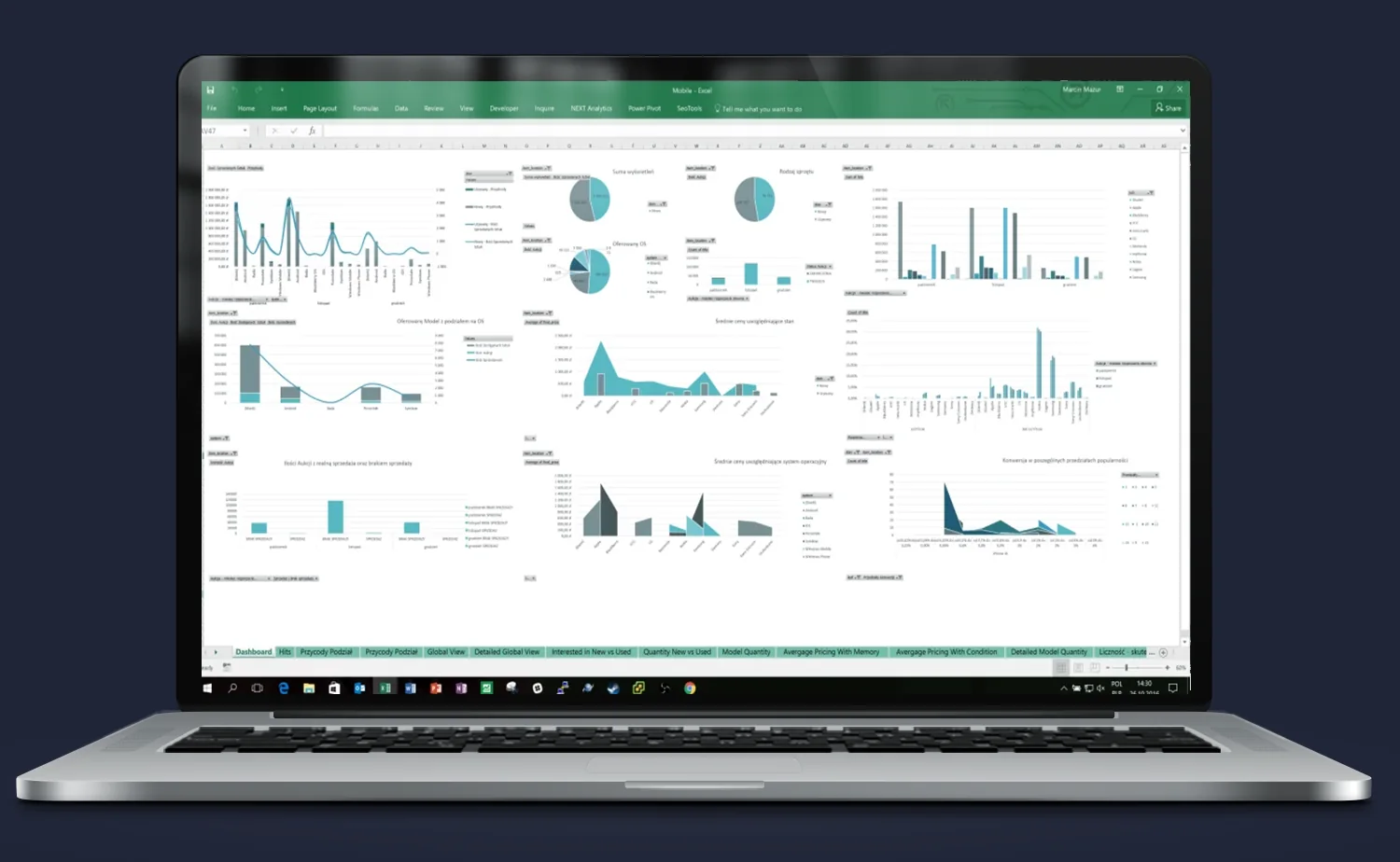
Scalability and Technical Challenges:
- The volume of data required division into thematic segments.
- Each segment had its own Excel application connected to the database via ODBC.
- Report files reached sizes of several gigabytes.
- Excel memory limitations determined the way data was processed and organized.
- Performance optimization through data segmentation and minimization of redundant operations.
Do you need someone who instantly understands the problem — and knows exactly what to do with it?
Most companies have data. What’s missing is the idea of what to do with it — and someone who will actually execute it. Origami Effect delivers both.