


Financial Model for an Agricultural Farm
The scope of the model covers grain, feed, and milk production.
Agricultural farms are an industry that requires precise planning and data, cost, and resource management to achieve success. Unlike other industries, agricultural processes are closely tied to nature and require strict monitoring. Data management plays a key role in this process, as farms must monitor and analyze all information, such as: weather conditions, soil quality, crops, livestock, sales results, and financial results.
Planning enables farm owners to have better control over costs, which is extremely important to avoid excessive expenses and improve profitability.
Implementation 2022
The financial model serves the following functions:
- managing company liquidity
- company budgeting and source of information for developing financial strategy
- assessment of the entire business potential along with measurement of its utilization and identification of main risk factors
- full financial modeling of all business areas
- company valuation
The financial model takes into account the following main data sets:
- salaries – broken down by contract type, employment period, salary amount, business line
- energy consumption – taking into account seasonal trends and matching to the business line
- machinery fleet – taking into account the purpose of the machine, average operating costs, insurance
- fixed assets register
- other fixed and variable costs not related to crop and livestock production
- financial liabilities – including capital repayment schedule, interest calculation methodology, interest rates, commissions
FINANCIAL MODEL – FINANCIAL LIABILITIES
Investment loan visualization
Each liability has its own visualization along with a summary covering the forecast period and remaining capital to be repaid.
The financial model enables projection of interest costs when introducing changes in WIBOR.
The module for managing loans and leases in the company’s financial model brings a number of benefits, including:
- Easier management of financial liabilities – the tool allows monitoring of repayment schedules, payment deadlines, interest, commissions, and other costs related to the loan or lease.
- Faster decision-making – data visualization makes it easier to quickly understand the financial situation related to the loan or lease, enabling faster business decisions.
- Increased efficiency and control over expenses – the tool allows better planning and management of financial liabilities, which increases control over company expenses and leads to cost savings.
FINANCIAL MODELING – MARKET TRENDS
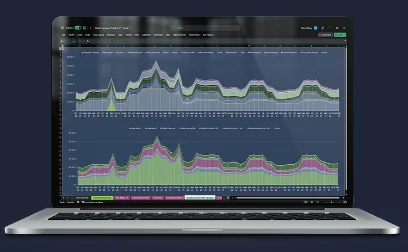
Market trends
Handling of simulations and financial forecasts taking into account changes in parameters spread over time, such as:
- Diesel fuel cost
- Electricity and gas prices
- WIBOR rates and inflation value
- Milk prices
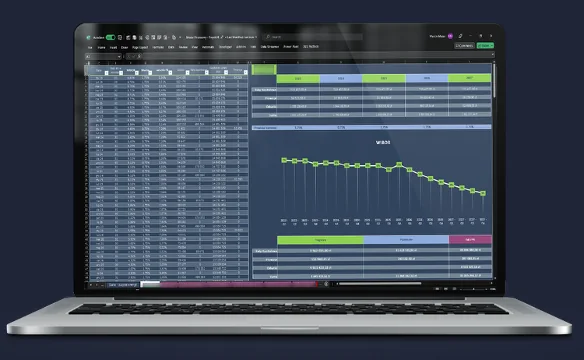
Analysis of the impact of WIBOR rate changes on the company’s financial condition.
By entering the appropriate parameters, you can visually see, among other things, how the cash position in Cash Flow will look.
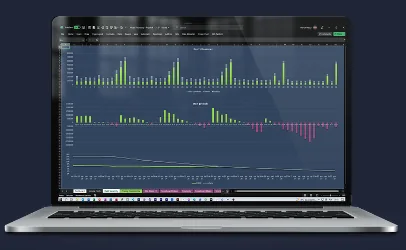
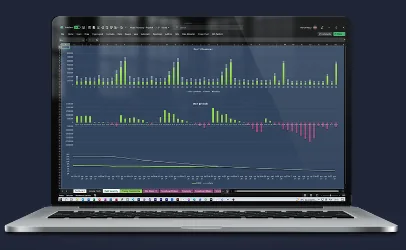
The market trends module enables simulations that allow identification of the potential consequences of a drop in milk prices for an agricultural enterprise. This simulation includes determining profitability thresholds, which means it is possible to determine the minimum price that must be obtained per liter of milk for the company to generate profit, cover production costs, or record losses.
The financial model takes into account the following data sources for modeling crop production:
1. Editable list of over 150 agricultural operations for ten different crops, including:
- operation execution date
- diesel fuel demand
- demand for materials such as fertilizers or plant protection products
- possibility of excluding an operation from the forecast (e.g. liming)
- possibility of outsourcing an operation in the model
2. Modifiable data sets regarding the costs of all materials necessary for crop production
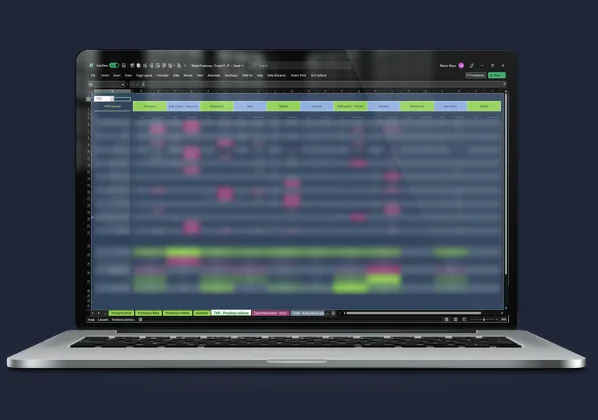
Crop production planning
To perform the calculation, it is only necessary to enter:
- number of hectares allocated to a specific crop in a given season
- forecasted grain price
- yield estimates
- percentage share allocated to feed
Calculates margin per ton and indicates profitability thresholds
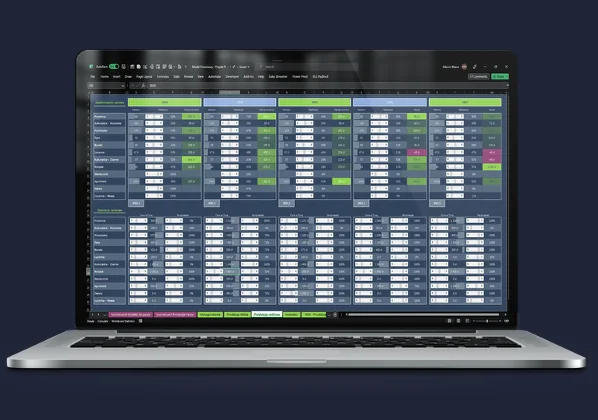
Technical cost of production for individual crops
The dashboard shows all indirect and direct costs related to crop production according to strictly defined categories.
DATA SOURCES FOR THE LIVESTOCK PRODUCTION MODULE
This financial model takes into account the following data sources for modeling and requires the user to specify only:
- Herd size taking into account eight categories. The financial model enables analyses regarding herd reduction and the impact of this action on the financial condition.
- Filling in the feeding formula
Other costs related to livestock breeding as well as planned energy costs and diesel fuel demand were created as a result of financial analysis and other applications.
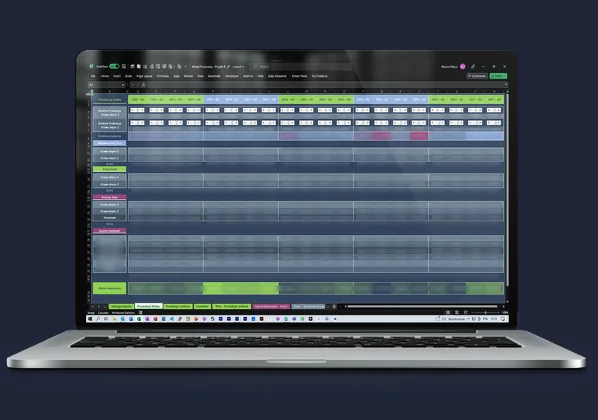
Milk production TKW analysis
Technical cost of milk production
Along with the calculation of milk production costs, the possibility of analyzing how increases or decreases in milk production affect the company’s financial results and liquidity was introduced.
In the absence of own feed, the model assumes its purchase by the company without the need for the user to enter cost items
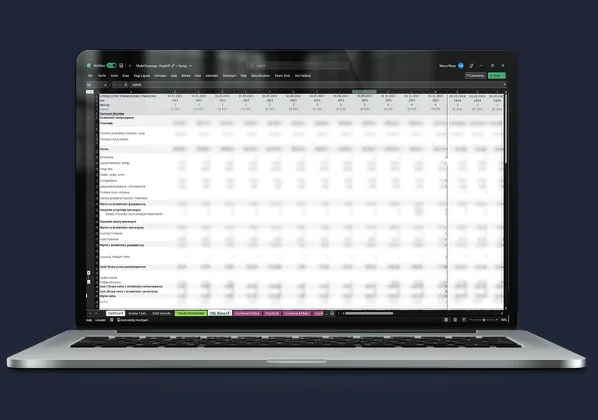
P&L, Balance Sheet and Cash Flow
The basis of the accounting reporting system. It uses all data calculated in the financial model.
The main goal is to present financial forecasts for banking institutions
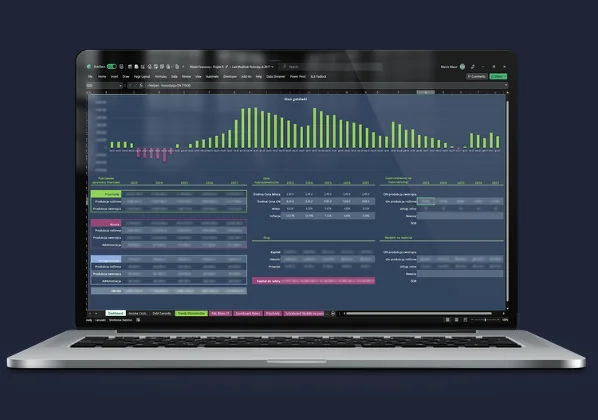
FINANCIAL MODEL – FINANCIAL DASHBOARD
Visualization of financial liquidity.
Contains basic accounting and financial information with a breakdown by business lines.
Key benefits
Allows precise tracking of costs and revenues:
The financial model enables analysis and forecasting of costs and revenues related to agricultural production.
Facilitates production planning:
The financial model takes into account many factors affecting agricultural production, such as fertilizer and feed prices, loan rates, etc. This allows for better production planning and increased efficiency.
Enables result comparison
Thanks to the financial model, it is possible to compare financial results with previous periods or with other agricultural farms. This allows better understanding of the market and competition and making more profitable decisions.
Facilitates risk management
The financial model allows analysis and forecasting of risks related to agricultural production, such as unfavorable weather conditions, rising feed prices or herd diseases. This makes it possible to protect against financial losses.
Enables better use of resources
Thanks to the analysis of costs and efficiency of individual activities, the financial model allows better use of resources such as land, machinery and human labor. This leads to increased profitability of agricultural production.
Enables quick response to market changes
The financial model enables ongoing monitoring of market changes and quick response to them. Thanks to this, the farm owner can adjust production to changing conditions and maximize profits.
Do you need someone who instantly understands the problem — and knows what to do with it?
Most companies have data. What’s missing is the idea of what to do with it — and someone who will actually execute it. Origami Effect provides both.